




































Alkaline Phosphatase (Placental type)/ALPP, His, Human
Alkaline Phosphatase (Placental Type)/ALPP, His, Human

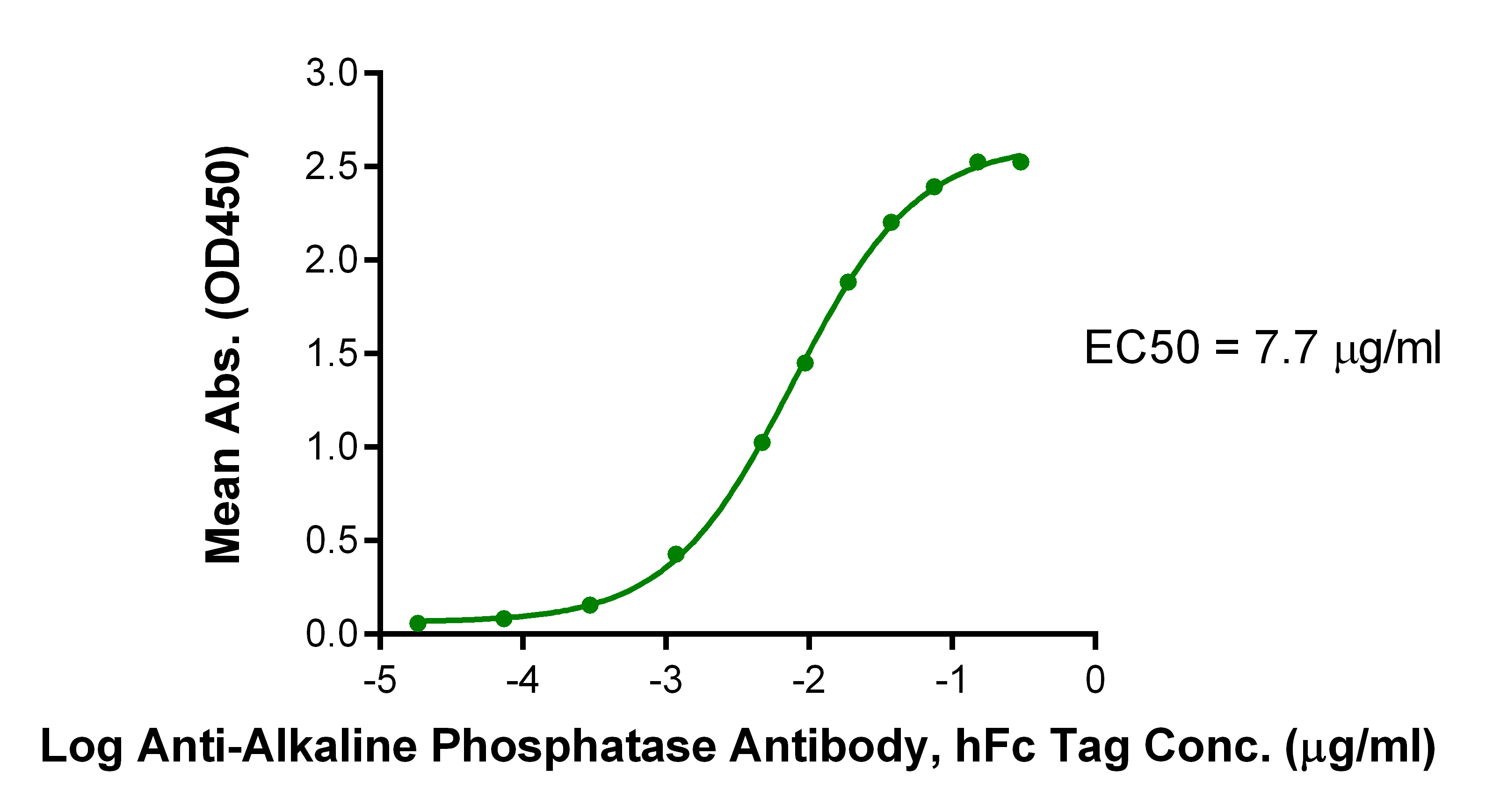
Immobilized Alkaline Phosphatase (Placental type)/ALPP, His, Human, His Tag at 1 μg /ml (100 μl/well) on the plate. Dose response curve for Anti-Alkaline Phosphatase Antibody, hFc Tag with the EC50 of 7.7ng/ml determined by ELISA.

Alkaline Phosphatase (Placental Type)/ALPP, His, Human

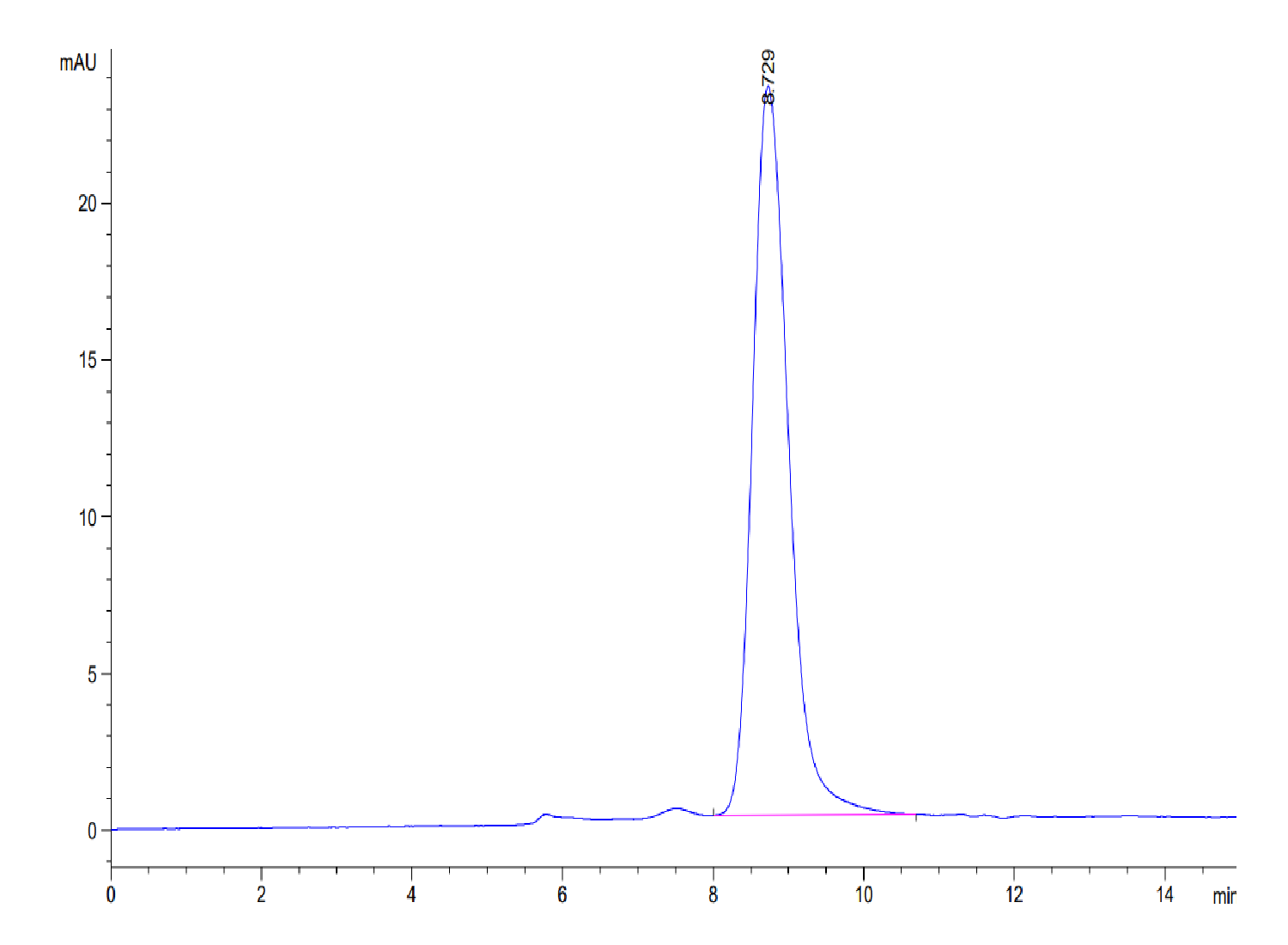
The purity of Alkaline Phosphatase (Placental type)/ALPP, His, Human is greater than 95% as determined by SEC-HPLC.

Alkaline Phosphatase (Placental Type)/ALPP, His, Human

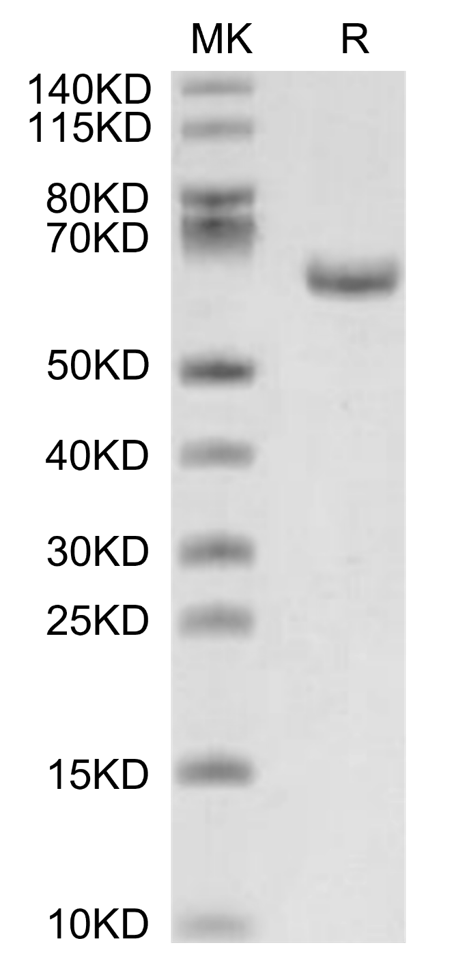
Alkaline Phosphatase (Placental type)/ALPP, His, Human on Bis-Tris PAGE under reduced condition. The purity is greater than 95%.

Alkaline Phosphatase (Placental type)/ALPP, His, Human

Alkaline phosphatase can be considered "our favorite enzyme" for reasons apparent to those who diagnose and treat metabolic bone diseases or who study skeletal biology. Few might know, however, that alkaline phosphatase likely represents the most frequently assayed enzyme in all of medicine. Elevated activity in the circulation is universally recognized as a marker for skeletal or hepatobiliary disease.
Z05011
¥69,021.00

Ask us a question
Product Introduction
Species Human
Protein Construction
Alkaline Phosphatase (Placental type)/ALPP (Ile23-Asp506)
Accession # P05187
His
N-term C-term
Purity > 95% as determined by Bis­Tris PAGE
Endotoxin Level Less than 1EU per μg by the LAL method.
Biological Activity Measured by its binding ability in a functional ELISA. Test result was comparable to standard batch.
Expression System HEK293
Theoretical Molecular Weight 53.8 kDa
Apparent Molecular Weight Due to glycosylation, the protein migrates to 63-68 kDa based on Bis-Tris PAGE result.
Formulation Lyophilized from 0.22 μm filtered solution in PBS (pH 7.4).
Reconstitution Centrifuge the tube before opening. Reconstituting to a concentration more than 100 μg/ml is recommended. Dissolve the lyophilized protein in distilled water.
Storage & Stability Upon receiving, the product remains stable for 6 months at -20℃ or below. Upon reconstitution, the product should be stable for 3 months at -80℃. Avoid repeated freeze-thaw cycles.

Examples
  • Alkaline Phosphatase (Placental Type)/ALPP, His, Human
  • Alkaline Phosphatase (Placental Type)/ALPP, His, Human

    Immobilized Alkaline Phosphatase (Placental type)/ALPP, His, Human, His Tag at 1 μg /ml (100 μl/well) on the plate. Dose response curve for Anti-Alkaline Phosphatase Antibody, hFc Tag with the EC50 of 7.7ng/ml determined by ELISA.

  • Alkaline Phosphatase (Placental Type)/ALPP, His, Human
  • Alkaline Phosphatase (Placental Type)/ALPP, His, Human

    The purity of Alkaline Phosphatase (Placental type)/ALPP, His, Human is greater than 95% as determined by SEC-HPLC.

  • Alkaline Phosphatase (Placental Type)/ALPP, His, Human
  • Alkaline Phosphatase (Placental Type)/ALPP, His, Human

    Alkaline Phosphatase (Placental type)/ALPP, His, Human on Bis-Tris PAGE under reduced condition. The purity is greater than 95%.


Background
Target Background Alkaline phosphatase can be considered 'our favorite enzyme' for reasons apparent to those who diagnose and treat metabolic bone diseases or who study skeletal biology. Few might know, however, that alkaline phosphatase likely represents the most frequently assayed enzyme in all of medicine. Elevated activity in the circulation is universally recognized as a marker for skeletal or hepatobiliary disease.
Synonyms Alkaline phosphatase; PLAP-1; ALPP; PLAP

For research use only. Not intended for human or animal clinical trials, therapeutic or diagnostic use.