



































Protein Isolation and Analysis » タンパク質単離・精製 » 精製用レジン » High Affinity Ni-Charged Resin

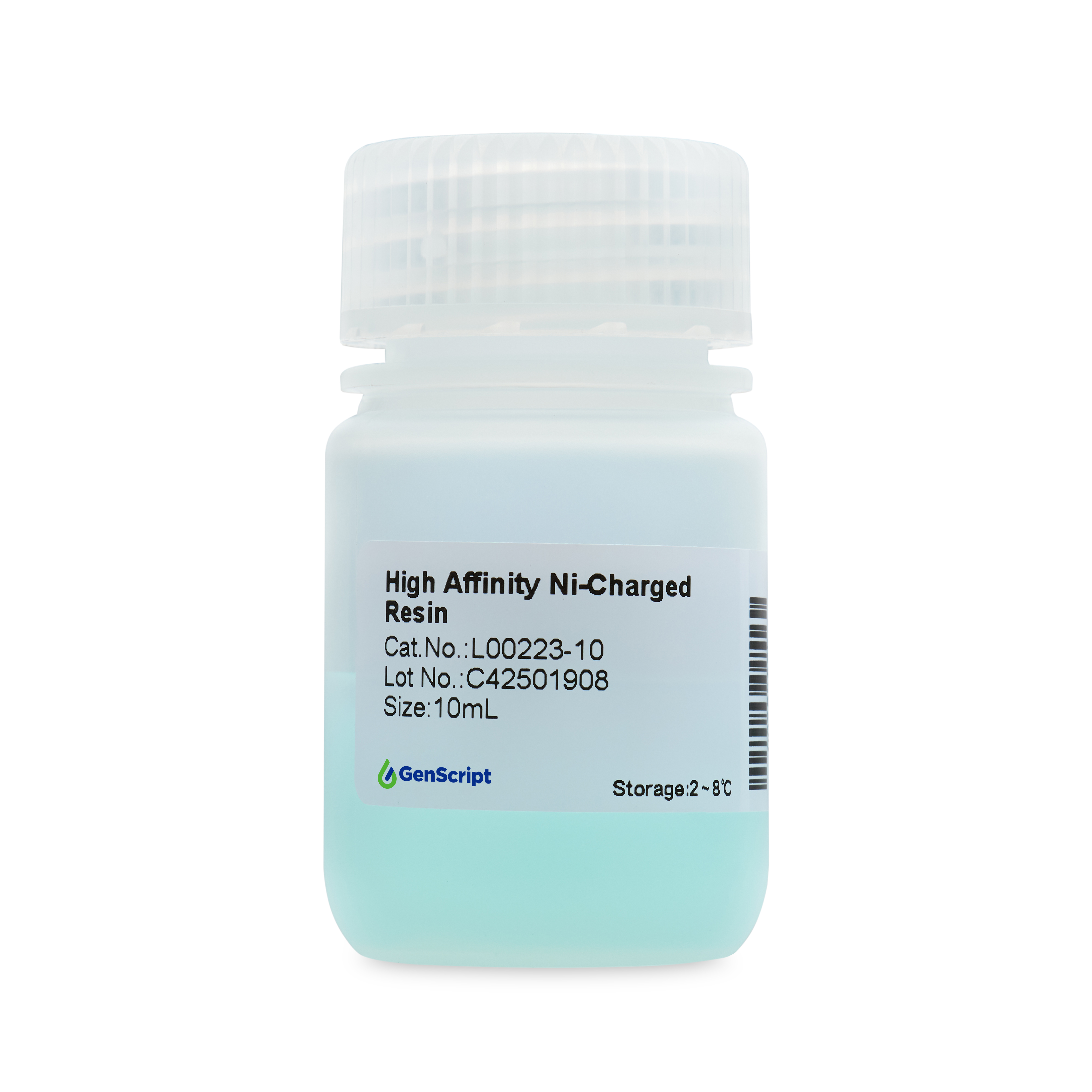
High Affinity Ni-Charged Resin

GenScript High Affinity Ni-Charged Resin is an 4% cross-linked agarose medium covalently coupled to a chelating agent that binds Ni2+ by four coordination sites for high- affinity purification of polyhistidine-tagged recombinant proteins. High Affinity Ni-Charged Resin has low Ni2+ leakage, high protein-binding capacity and stability, and is compatible with a wide range of additives used in protein purification. This makes High Affinity Ni-Charged Resin the excellent choice for high performance purification of polyhistidine-tagged proteins.
L00223
¥11,703.00

Ask us a question
Overview
Product description GenScript High Affinity Ni-Charged Resin is an 4% cross-linked agarose medium covalently coupled to a chelating agent that binds Ni2+ by four coordination sites for high- affinity purification of polyhistidine-tagged recombinant proteins. High Affinity Ni-Charged Resin has low Ni2+ leakage, high protein-binding capacity and stability, and is compatible with a wide range of additives used in protein purification. This makes High Affinity Ni-Charged Resin the excellent choice for high performance purification of polyhistidine-tagged proteins.
Key Features ● low Ni2+ leakage
● high protein-binding capacity and stability
● compatible with a wide range of additives used in protein purification

Properties
Formulation 50% slurry in 1 × PBS containing 20% ethanol
Matrix 4% cross-linked agarose
Average Particle Size 90 μm (45-165 μm)
Ligand Nickel
Binding Capacity ≥20 mg of 6xHis-tagged protein (27 kDa) /ml settled resin
Reagents Compatibility
Denaturants Detergents Reducing Agents Salts Others
6 M Gu·HCl 2% Triton X-100 20 mM β-ME 4 M MgCl2 50% glycerol
8 M Urea 2% Tween 20 1 mM DTT 5 mM CaCl2 20% ethanol
—— 1% CHAPS —— 2 M NaCl 1 mM EDTA
Application 1. Purification of polyhistidine-tagged proteins under native conditions.
2. Purification of polyhistidine-tagged proteins from E. coli under denaturing conditions.
Storage 2-8 °C; DO NOT FREEZE


For research and manufacturing use. Direct human use, including taking orally and injection are forbidden.